Edinburgh University Savoy Opera Group – Summerhall
It’s always curious to see how universal themes are analysed, translated and reimagined in a modern context, especially the medium of political satire; how a story becomes relevant to each new generation regardless of time period. The Edinburgh University Savoy Group’s take on Biolanthe – Fraser Grant and Rosalyn Harper’s adaptation of Gilbert and Sullivan’s Iolanthe – is a funny if somewhat uneven performance. With updated lyrics by Lewis Eggeling, this show has moments of genuine hilarity that are funny for the sake of being funny rather than humour that occurs because of a sense of existentialism or brush with reality.
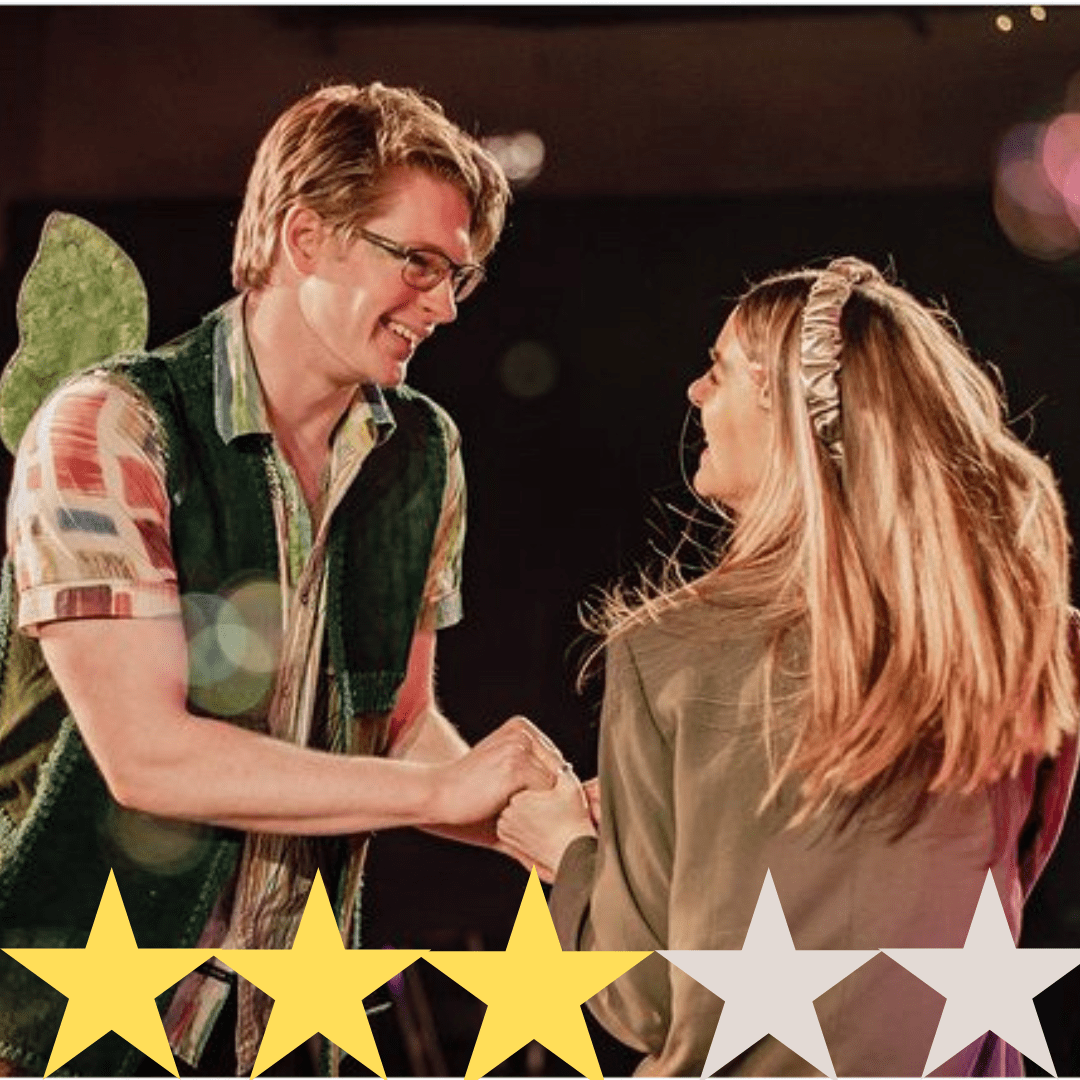
Directed by Hunter King, Biolanthe follows Strephon (Ewan Robertson) – a half human, half-fairy – who wishes to marry Phyllis (Hannah Whelan), the daughter of the Lord Chancellor (Thaddeus Buttrey). In spotting Strephon with his mother, Biolanthe (Anna Judelson), Phyllis breaks off their engagement, leading to a confrontation between the Fairy Court and the Lords that results in Strephon made a member of Parliament as a representative of the Fairy Court. The plot holes and abandoned storylines that are endemic in the libretto of this show do weaken the cohesiveness of the plot, but it doesn’t make the comedy any less enjoyable, although it’s not clear at whose feet such an accusation should be laid down at. The reasoning and motivation behind the false start during the overture is also unclear, as it is rather unnecessary and didn’t really seem to have a point.
The unpretentious setting of Summerhall adds to the overall aesthetic of Azalea Drace’s set design, camouflaging itself so well that it pretty much becomes a neutral backdrop to the action onstage. The graffiti on the flats – the only tangible set piece – is a nice and very creative touch, which helps to set the tone for the rest of the show, but the graffiti almost looks to purposeful and neat, which taints the effect a little; instead of being rebellious, it becomes performative. Millie Franchi and Eloise Robertson’s costume designs are a perfect fit for the characters in question. This is particularly so for the fairies and Phyllis, where the simplicity of the outfit manages to speak volumes for not only the character, but the modern parallel that is being evoked in the role. Freya White’s lighting occasionally misses the mark, in that it attempts to be a little stylistic in mirroring the music, but such a technique is more effective in musical theater or band gigs than for an operetta, where more naturalistic states are called for. The cues come in a second or so too late for them to be effective, leading to strange lighting states at points where they aren’t particularly suitable for the moment.
Biolanthe is not an easy show or score to perform, and for that significant feat that cast must be given credit. That being said, the quiet volume of many cast members, poor enunciation, lack of confidence and energy means that we miss out on context, jokes and basic awareness of what is going on. The lack of volume is easily fixed by giving the casts mics. It’s unclear whether it is just first night jitters or something else, but even though eventually the cast find their footing, the lack of not only confidence but commitment and enthusiasm by some members means that there is a varying quality of performance, which hampers our own experience and ability to enjoy the show. It’s very easy to spot – especially in such a small cast – and the gap between those throwing themselves into their performances and those who are not is very distinct.
Whelan is a strong performer, possessing a sweet soprano that is delightful to hear. It’s apparent she has the training and talent to shine in the role of Phyllis. Her lack of volume on occasion seems to be due to a lack of vocal support, and it means that it is difficult (or even impossible) to hear her singing. This is a shame as Whelan has a lovely voice that deserves to be heard. Robertson and Buttrey’s performances in their respective roles are a masterclass in committing to the bit. They both seize upon the comedic potential of every little moment and wring it for all that it’s worth. Both actors are also fantastic singers and there is never a dull moment when they are on stage. Buttrey’s performance is best described as, ‘what if Laszlo from What We Do In The Shadows did an impression of Boris Johnson’ and the result is simply amazing. It’s such a masterful depiction of a role that we would typically associate with that of a villain (thinking of The Marriage of Figaro for example), but the complete buffoonery that is exhibited – whilst rather depressing when thought about too deeply – is just perfect for this show. Izzie Atkinson is incredibly well suited to the role of the Fairy Queen, and the talent that she displays is testament to her strength as a performer. Atkinson possesses a really strong and powerful alto, and her rendition of Oh, Foolish Fey is such a beautiful moment, truly a highlight of the show.
Biolanthe is a fine satire and the cast manage to create genuine moments of relatable levity. More consistent confidence, volume and enunciation is needed both for clarity and to generally improve the quality adaptation of this operetta.
By Katerina Partolina Schwartz
Photo Credit: Andrew Morris
 Pepper & Salt
Leave a comment