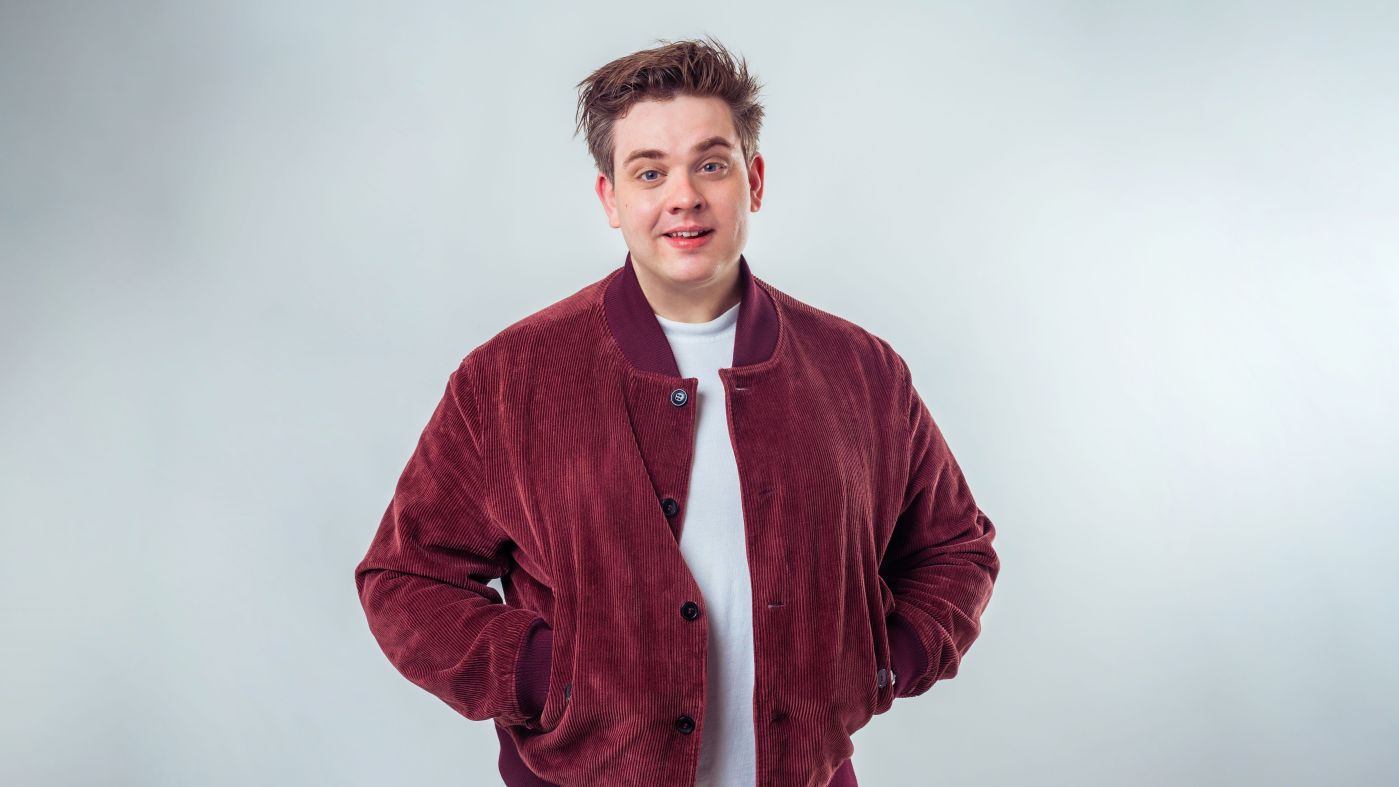
Ollie Horn joins Pepper&Salt to discuss his new Edinburgh Fringe show, ‘Comedy for Toxic People (and their friends)’, finding the line and his plans to challenge his audiences.
How would you summarise your show?
My show is called Comedy for Toxic People, and it’s a tongue-in cheek rebrand. My previous shows have been earnest story-telling shows, and this show is me being silly, toxic, provocative, flirty and naughty in order to find a wife.
I am doing other bits and bobs. Every day I’m also doing a show at 3:45 pm called Not My Audience which is a panel show where three comedians basically make up stand-up based on audience suggestions through an app, and it’s really good fun. I’m also going to be one of the hosts of the 11pm Live at the Big Cave Show at Just The Tonic, which is a big boozy late-night stand-up show where new faces as well as some stars of the fringe do their thing in a really fun, silly late-night environment. And the reason why I’m looking forward to that show is as soon as it ends, my friend Aidan Sadler – who is a fantastic cabaret performer- is hosting The Big Gay Afterparty. It’s a big, silly queer-friendly pop-up cabaret. The point is that you can watch this amazing stand-up show and stick around and watch burlesque and drag and all sorts of fun stuff. So, for me that’s very Fringe, that kind of thing only happens at festivals.
How does the audience’s awareness of the current zeitgeist – for example in relation to the guy that got arrested in Romania – play into what you cover and what audiences should be aware of?
I talk about that, one of the throwaway little lines I had, I say that I’m a graduate of The Hustlers’ University, which is his fake online university. So, it is me obviously parodying the toxic man, and kind of saying “women want this, women want you to be like this.” But of course, the actual punchline of the show is, if I were to do everything I say I’m going to do in the show, I probably won’t find a wife because no one would want to be my wife. I touch on those things. There are lots of people that agree with Andrew Tate and lots of what he says does have merit; about how young men should have more confidence and you’ll feel better off if you work out, and there’s loads of stuff that he says which is absolutely unquestionable. But then there’s also the fact that he’s an actual misogynist. I think part of the challenge of the show is me teasing out some of these ideas and potentially saying offensive things, but people knowing that they’re coming from me. Therefore, if I am talking about these ideas, I am joking.
I think a lot of people forget that the point of comedy shows is that we are sometimes laughing about things that you don’t agree with. And I think that there’s a problem that some stand-up comedians have, which is that their audience sees them for kind of moral and social guidance, they go to watch their shows because they agree with their world view. And then what happens is that comedian is creatively boxed-in because it means that they can’t change their minds without upsetting their audience. And changing your mind about things is a really smart thing to do sometimes. I don’t want the audience to know what I think because it shouldn’t matter. The audience don’t have to like me, they don’t have to think I’m a good person, in fact it’s probably better if they think I’m a bad person, that I am morally ugly, because most people are. Basically no one in the world’s got perfect opinions, so I think it’s better if the show is a bit messy and improvisational. By creating this atmosphere where the audience can chip in and challenge me gives you a bit more leeway. It’s not like I’m coming on with a script saying, “Here’s what I think.”
Around a year ago, there was a lot of news about bad audience behaviour after COVID. How does this disruption feed into the trend of comedians using or relying on audience interactions for social media content and engagement?
I don’t know if they’re necessarily linked, I think the predicate of this question might not be proven. When I think of bad audience behaviour, it’s often not people looking to emulate what they see on Tik Tok, but rather people just after COVID forgot how to behave in a public setting or generally people acting more selfishly. I don’t know if it’s necessarily cause and effect, but the proportion of crowd work content on social media is far greater than the than the proportion of crowd work content you see in actual comedy clubs. Crowd work is over-represented on social media.
By calling my show Comedy For Toxic People, I’ve leaned into it and if someone turns up and says something rude to me that’s fair play. Sometimes in the show, I’ll let the audience ask me questions and sometimes they give me backhanded compliments, they say rude things about me. The point is we’re here at a comedy show and if you’re making people laugh as well, then that’s great. I should say though that generally Edinburgh Fringe audience members are fantastic. The Edinburgh locals get it and the people that travel for the Festival have invested so much to be here that they want to have a great time, they don’t want to disrupt the show. But I don’t do it, I don’t provoke audience for content. I do often put a camera up at my shows in case something happens, but I do think that my first duty of every show is to the audience that is in the room. And I do notice if comics are wondering more about how that’s going to look on camera versus how it’s going to do in the room, they’re obviously going to prioritise being funny for the clip rather than being funny in the room.
One other aspect of this is, I like the idea that I can say stuff onstage which I don’t agree with, which might be offensive or might go too far. I think that’s fine. How can we possibly know what the limit is without crossing it occasionally? It’s impossible. So, I think that can only happen when you’ve got the trust of an audience, when an audience knows that you’re doing your best to make them laugh within the constraints that they’ve set. I think if you’re worried about that content being put online and understood without the context that you’ve set up before you say those things, or without the trust that you’ve established from the audience or without potentially the buy-in or agreement from those people, I think you do start to be less creative. I think I would. If I knew that everything I said in my shows was potentially going to be put online, I probably would be less funny, cause I’d be taking fewer risks.
So, is that where in your own mind you would place the line between funny and offensive?
Yes, because the same thing could be both funny and offensive, right. I don’t think that just because something’s offensive does not mean it’s not funny. We’ve all got experience of laughing at something and then after we’ve laughed gone “Oh goodness.” So just because something is offensive doesn’t mean that it’s not funny. Also, just because something is offensive doesn’t mean that it shouldn’t be said. Somebody being offended is not a reason to not do something. I can think of material that others might talk about, about something that’s really personal to me and my personal situation and my mental health or whatever and I might think, “Oh I didn’t enjoy that,’ but I wouldn’t deny them the fact that they’re making a whole audience of people laugh, I wouldn’t want to stop them from doing that.
I think the difference is if I were to inadvertently say something that really, really upset somebody in my show. I don’t think that has actually happened yet, I’ve definitely said something where people have gone, “oooh” or kind of teasing me back, but if I were to cross the line and say something that turned the audience; if they haven’t walked out cause they’re just so cross, if they’re still in the room, I can win them back. We can discuss these ideas and I can maybe make them laugh by talking about their reactions and learning from it and finding a new path. And that’s really what the very best stand-up is; finding the very, very edge cases of what we might all, all find palatable.
The difference is that in a room where I’ve said something that might get a bit of an “ooh” or people might misunderstand me – I might just say something clumsily and they might go, “did you really mean that?” or they might not know some context. A really good example is I once said to someone that I could do a better Japanese accent than them and I did it, and people thought, “oh that’s really offensive.” And then I revealed that I speak fluent Japanese, so of course I can. That’s a good example of with a little bit of extra context, suddenly it’s not offensive, naturally of course you’re going to speak in a Japanese accent if you’re speaking the Japanese language. Little examples like that I think show that in a room if you do something, you can sometimes claw back or persuade or meet in the middle. But once that clip’s online, you can’t do that in the comments section, people have already decided what they think.
In Shakespeare, the role of the fool and the king are very distinct, with the idea that a fool can’t be a king and a king can’t be a fool. How do you think this applies to the modern context?
I think comedy is just one tool, just one lever to pull in order to provoke power. A good example I think is Joe Lycett did this well, when he said, “Well, I’m actually very right wing.” I think that was a good example of taking these people very unseriously. Cause I think one of the things that comedians can do is that we take very unserious things seriously, you know you’ll see a 10-minute routine on a cheese grater. But we’ll also take things that we’re told are serious unseriously. I’m not that kind of comedian, I don’t think that comedy is the best platform for social change. And I do believe that if your thing is to stop fracking or if your thing is to improve trans visibility or if your thing is to do one of these really big, powerful, important societal movements, comedy is not necessarily the best platform for it. Obviously there amazing are shows that have these at their heart, don’t’ get me wrong, but you’ve got to be so skilled. And you’ve also got to do a bunch of other things, you’ve got to make the audience laugh and market yourself. I believe in loads of social justice causes, but I don’t bring them into my shows because my first job I think is to entertain my audience. And I don’t want my audience to feel guilty that they eat meat if I think eating meat is bad, or I don’t want them to feel ashamed of their Israeli heritage if I’m talking about Palestine, or whatever it is. There’s loads of platforms for that and my show shouldn’t be that. So, I’m generally not the kind of comic that speaks truth to power, I really want people to laugh first and foremost and have a really good time, because I also think that’s important.
But that said, I think lots of people can use the skill of comedy, even people who aren’t comedians. What comedy can sometimes do is say a truth in a roundabout way. You can kind of build consensus without going directly to the finish line. And so I do think more and more people should consider the tool of humour, for example in the workplace. I can think of a story with my ex where she basically had a sexist comment made about her in the workplace and she responded by make a joke. She made a joke in front of all of her colleagues. That was, I think, a fantastic way of dealing with it. She said what she needed to say, everyone understood what she needed to say, but then she didn’t get a reputation as someone who just moans and complains. What happened is the person who said the sexist thing never said that sexist thing again, everyone in the office knew that she had won, and you shouldn’t mess with her and she didn’t have any of the collateral damage of going, “how dare you, I’m filing an HR complaint,” and all the stress that came with that. I think humour can be a really good tool, not just for comedians, but for everybody.
By Katerina Partolina Schwartz
Photo Credit: Gabrielle Boudville
 Pepper & Salt
Leave a comment