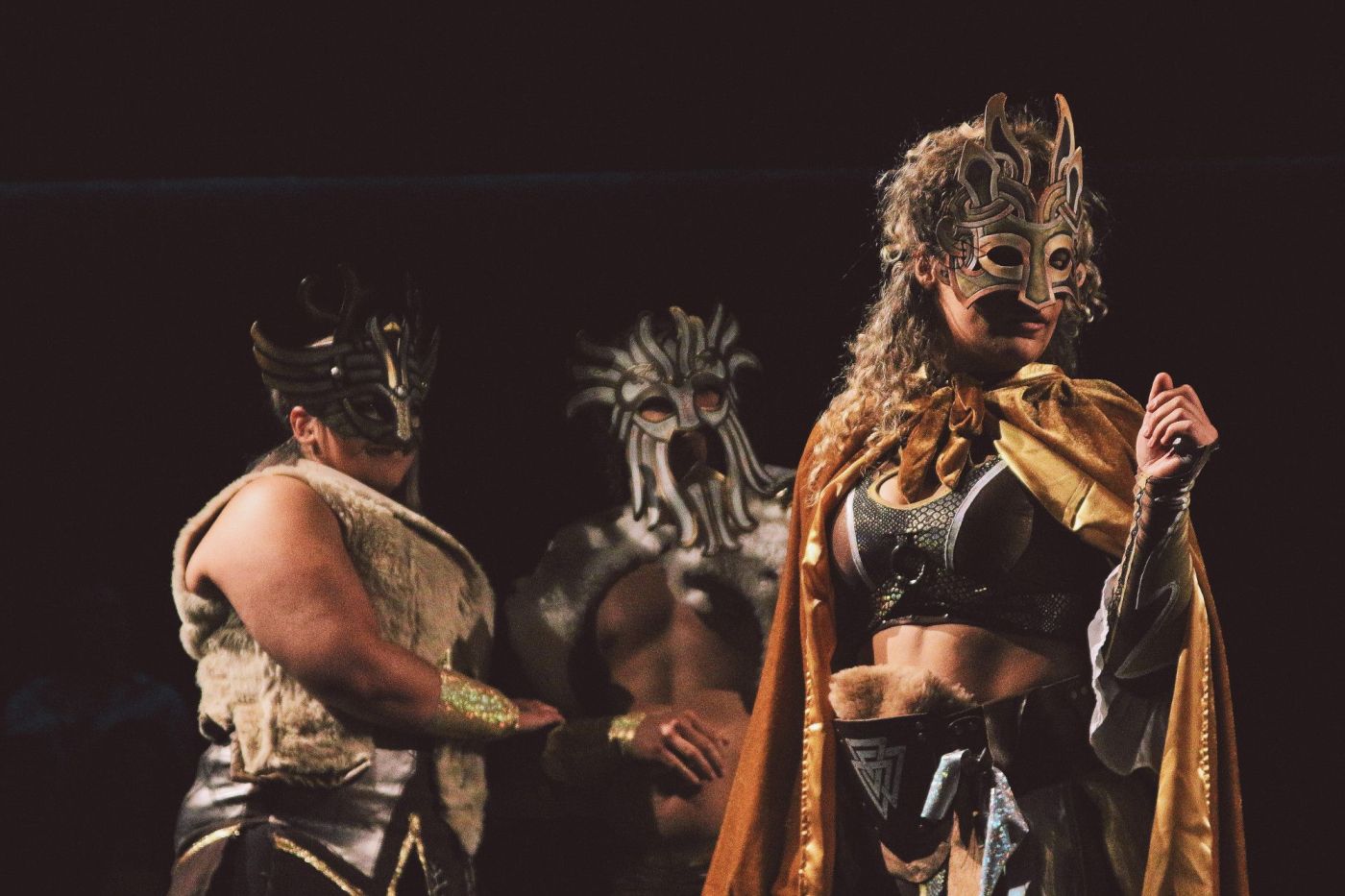
Creator of Mythos: Ragnarök – Ed Gamester – joins Pepper&Salt to discusses show’s return to the Edinburgh Fringe and it all came to be.
What is the elevator pitch for Mythos: Ragnarök?
“Norse Gods, wrestling.” I leave the rest to the imagination.
What inspired this show and its use of Norse mythology?
Mythos: Ragnarök is a tribute to my lifelong loves of mythology and wrestling, both of which I believe are chronically misunderstood and unappreciated, yet bare similarities that make them perfect bedfellows. I wanted to create a show that would change the way people see both. It would be the easiest thing in the world to make a wrestling show and just dress the wrestlers up as Norse Gods; I wanted to create a proper retelling of the mythology that showcased the ancient stories just as much as the skills of the performers and was entertaining beyond mere spectacle.
How would you describe Mythos: Ragnarök for someone not familiar with the show or Norse mythology?
The Norse myths are ancient stories about Gods building our world and defending it against all kinds of in-fighting, mischief, and angry giants, only to see it destroyed in an inevitable cataclysmic battle. My show takes those stories and brings them to life a few feet from your face, using a cast who are trained to fight one another in a dramatic, dangerous, and yet incredibly entertaining way. It’s the kind of show that could only be created and performed by people who genuinely love what they do.
What was it about Norse mythology and the story of Ragnarök in particular that made it ideal for a physical theatre piece?
Superhuman warriors using ridiculous tricks and exaggerated combat to settle their feuds over lust and power in epic sagas that turned them into household names… Can you tell whether I’m describing the Norse myths or WWF in the 1990s? I consider pro wrestling to be a part of our overall mythos. Despite being deeply engrained in our
history and culture, mythology (and wrestling as part of it) has largely been forgotten and reduced to a handful of dimly recognisable names and vague fables, groggily drawn from the recesses of our childhood memories. I want to change that: to bring wrestling and mythology back into the public consciousness, to remind everyone why they were such huge parts of our culture in the first place.
What are you looking forward to at the Edinburgh Fringe?
I’m looking forward to showing my work to new people and hearing what they think about it. It’s tough going in Edinburgh, but the chance to perform and get feedback every day from such a huge variety of people is rare and valuable – I’m looking forward to making the most of that. We opened in Edinburgh 2022 to one person in a room that could hold 137. This year our venue holds 500. The road from one to the other has been indescribably rough and I’m looking forward to stepping on stage and knowing it was worth it.
What was the rehearsal process like for this show?
There wasn’t one. I wrote the script, sent it to some of my favourite performers and we just went out and did it. We met up a couple of times to check everyone knew it, but we never actually practised it. That was almost three years ago. We’ve performed the show 150 times since then, so we’ve sort of rehearsed it organically, but what most people would consider as a “rehearsal process” never actually happened. Or, if it did, it happened live on stage!
What was the development process like for this show?
Again, there wasn’t one. I’m not from a theatre background so I went about this like a wrestler: I came up with an idea and, a month later, we were onstage at The Cockpit Theatre in London. To be honest, if I had known the way things are conventionally done in theatre, I would still have done it the same way. We had no funding: my partner Melanie and I paid for everything ourselves, made everything ourselves and reinvested every penny we made from the show into improving it. The first time we went to Edinburgh Fringe cost us more money than we have ever had in our lives, but we still made sure to pay everybody. Again, that was almost three years ago. These days we are lucky enough to have our promoter behind us and the ongoing hard work of our cast, without whom we would never even have got started.
From the outset, Mythos: Ragnarök appear very physically intense. What are the guardrails put in place for the cast, for performing it over the Fringe?
We look after each other. If something in the show is hurting, not working or not feeling safe, we talk about it and we change it. If somebody is struggling, we try to lighten their load. If somebody gets injured, we work around it until they’re healed. Otherwise, there’s no getting around it: it’s a full-on physical performance and, like any athletic team, everyone is expected to keep up. We use more choreography than is typical in wrestling, which makes things safer, but it is important to me that we don’t dilute the full contact intensity that makes wrestling unique as a performance art. I like to think we avoid unnecessary risks, but if you take all the danger out of wrestling you end up with stage combat – and anyone can do that. Pro wrestling isn’t for everyone and that’s OK, it’s part of makes it so special: there aren’t many people who can do this. I’d love to say we end each day in Edinburgh with a hot bath and a few hours of stretching and physical therapy, but the reality is we drink a beer, scrub the sweat and blood off in a tiny shower, and try to cook dinner at 4am with ten of us in the kitchen at once. If that sounds like a complaint, it isn’t: it’s an observation that I hope will help people understand just how much we want to be there every night.
By Katerina Partolina Schwartz
Photo Credit: Strangehouse Photography
 Pepper & Salt
Leave a comment