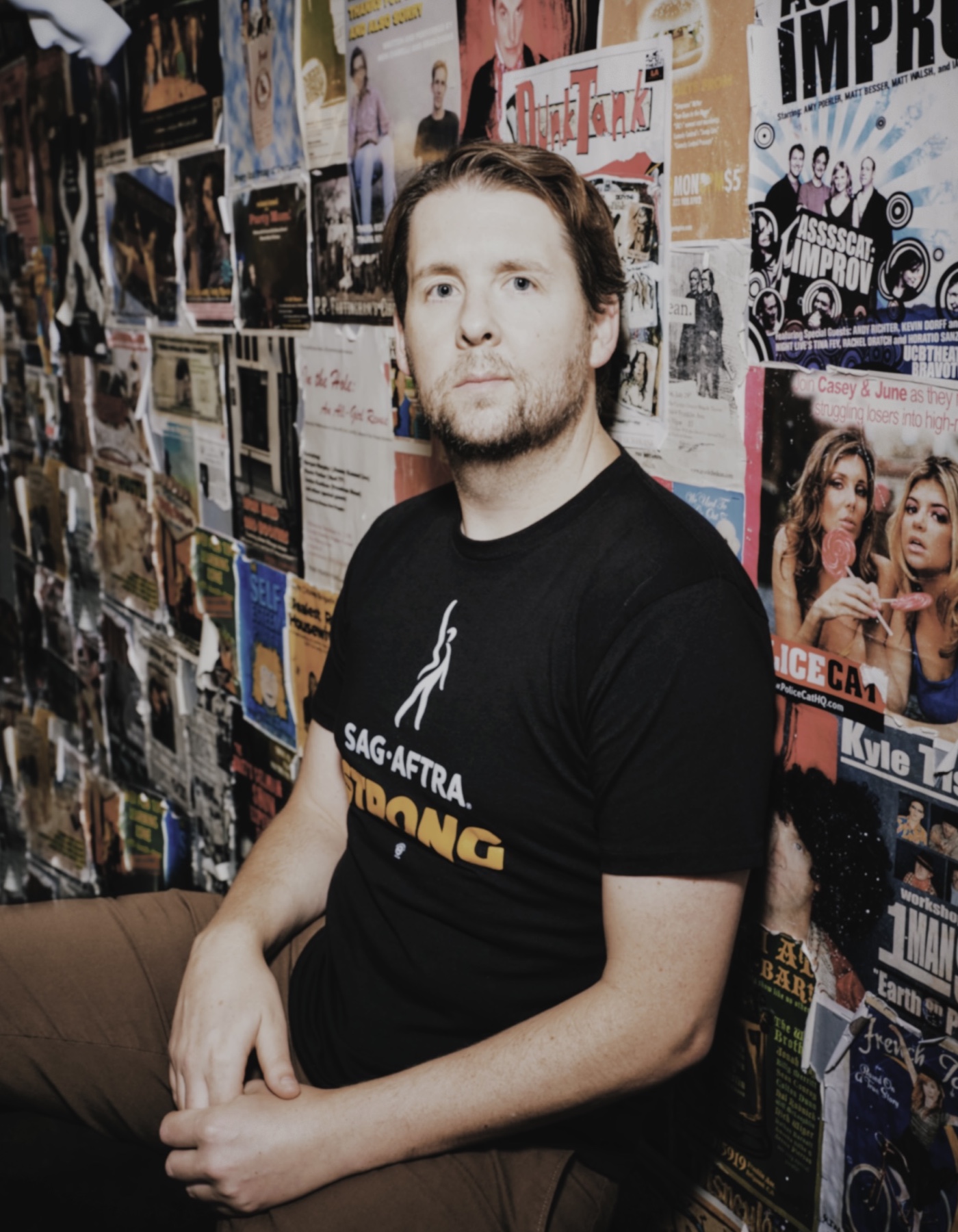
On the heels of their Edinburgh Fringe debut, Founder of a troupe of ‘LA’s very best improvisers,’ (The Comedy Bureau) Casey Feigh sits down with Pepper&Salt to discuss how recent events have intertwined with Holy Shit Improv’s history, the nature of improv comedy and the most important partisan issue in America; Twizzlers or Red Vines (there is a right answer to this question).
Just to start off, Twizzlers or Red Vines?
Twizzlers for sure. Twizzlers were one of those foods when I was a kid that if I started eating, I just couldn’t stop. I’d have the whole bag. Red Vines, I’ve tried to get a little bit as I got older, but it’s just not my not as nice.
Right, so now that you’ve answered that question correctly, we can continue with the interview. What is the elevator pitch?
Holy Shit Improv is an improv comedy show featuring some of the best improvisers in Los Angelos, maybe the world. That’s what we’re trying to find out! It’s fast, funny, every show is different. It’s a little different from some European-based improv that might be a little more story-based, we’re a little different in that it’s really comedy-forward, so it’s really about trying to find the most fun thing in each moment and heightening that, playing with that all the way to the extreme. It’s a great time.
What are you looking forward to about making your Edinburgh Fringe debut?
To me it’s like, I’ve been to Edinburgh once before, I was there in February/ March and really liked it, and everyone kept saying, “Well, you got to see it during the Fringe, you got to see it,” and I was like, “I don’t know, it’s already pretty nice right now.” But so, I’m excited just the idea of that many creative people in one location, there’s got to be energy to that that I’m excited to feel and like lean into. Meet people who are masters of their crafts and who have been their passion and showing their passion to people. And people who would travel and make a vacation to go see people’s art is very cool. I’m excited just to be in the city with so many creative people and you know learn from each other, and see things that I’m not exposed to in L.A.
What is Holy Shit Improv’s hook, is there anything in particular that you work around?
Not so much. We usually do halves of the show. The first half is just like true improv, we get a word, and we just go. And then the second half, we’ll talk to the audience a little bit and we’ll pull stuff from their real lives. I guess there’s a little something there in the fact that the audience is a part of the show. Even in the first half, we work with the audience. It’s one of the things that I dig about improv; a stand-up show or a sketch show is something that’s got to presented to you, but as an audience in an improv show, you are a part of it even if it’s just by how much you’re laughing, then we’ll follow it in that direction or how much you’re not laughing, then we’ll move away from that. But certainly, the second half in we talk about people’s lives, things that have happened from the audience and we turn that into comedy scenes, so I think that’s a fun aspect of our show.
Is there anything that people should be aware of before going to see the show?
Just be aware that it’s going to be fun and get ready to have a good time. It really is at its core a group of friends having fun with each other onstage, and I’m a believer of like in order for the audience to be having fun, the people onstage need to be having the most fun. And we certainly do that. You don’t need to prepare anything, other than just an open-mind and be willing to come along for the ride.
don’t be afraid to sit in the front row, we’re not going to turn this into something where we’re making fun of you. We’re not going to try and get a viral Tik Tok out of something weird that the audience says. It’s all about positivity and love and support, so for us to accidentally kind make fun of someone in the crowd, that scene stands out for me.
“Twizzlers for sure. Twizzlers were one of those foods when I was a kid that if I started eating, I just couldn’t stop.”
How did Holy Shit Improv start?
A group of us have all been doing improv for years, I think between the cast there’s probably 100 years plus of improv experience. So, what happened was during COVID, all the theatres in L.A. shut down, and then the improv theatres were very slow to reopen; people doing stand-up kinda found ways to perform outside or perform on trucks and other people were in their cars, which sounds very American; improv theatres and stand-up in trucks. But it happened. Improv was slow to come back and partly because we’re basically spitting in each other’s faces a little bit, and so for COVID it’s not ideal. And then it finally still felt safe enough for me to get back out there and start performing, but theatres still hadn’t opened yet, so I started Holy Shit Improv as a chance to perform and get comedy improv back in Los Angelos. So, started 3 years ago – July 2021 – and we’ve been doing it ever since.
How did the WGA and SAGAFTRA strikes affect your work?
It made booking so easy. Cause everyone was available. We had D’Arcy Carden from The Good Place performing with us, we still have Rachel Bloom from Crazy Ex-Girlfriend performs with us a lot, Bobby Moynihan from Saturday Night Live, Jason Mantzoukas from… everything. But those few months everyone was looking for a relief, you know; we were walking, picketing all day, it was sweaty, it was hot, it was not fun, it was kind of frustrating and sad. And so, I think everyone was excited to come and play with their friends and mess around in the evening and also get to perform, get to do some comedy. Looking back on that, as a producer of an improv show it was the greatest time ever because everyone was available. And then of course, we thankfully got a deal so we could go back to work. But now when I reach out to people, they’re shooting movies or television, it’s like a little harder to get everyone’s schedules to line up.
I was wondering if you could speak on the trend of DnD improv shows in general. Why do you think they have become so popular?
I could guess. Improv itself sometimes is best around structure, structure allows for creativity to flourish. So, if there is a structure that everyone knows and is identifiable, then it might be easier to promote your show. So, for example like, we were taught out here that you almost want the name of show for people to be able to imagine what that might be. So, if I say like, “It’s DnD and it’s improv,” then it’s like, “Okay I know Dungeons and Dragons, I know what that looks like, and it’s improvisers doing it, okay I can imagine what that is,” so there’s a way to promote it that works better. And then also I think there was some successful ones that took off online through like Patreon and through other streaming services and so once something is popular and works then I think other people are going to try and do that thing as well. And also, I’ll say from the ones I know about, the people who are doing it are very good improvisers. There are a few friends of ours who are on some of those very popular DND things who – I think they just toured Europe recently – are all amazingly funny people who are great at improv. I think had they chosen something else, had they done, you know a sports broadcasting but it’s improv, it would’ve been just as funny, but they are interested in DnD, so they’re combining two of their loves. And when you’re creative and intelligent and a great performer and a great writer, and you’re doing something that you already enjoy then that’s probably going to appeal to an audience as well.
What’s the craziest or your favourite inside joke that has come out of a performance?
There was once a time where someone – I think it was our 50th show – and a fan like baked us a cake of some sort, say it was a carrot cake, baked us a carrot cake. And it was so nice. But I hadn’t cut into it yet, so I called it a different type of cake, I said like, “Oh I fan brought us…” and I forget what kind of cake it was. But then later on, we get into a scene and we’re like yelling at someone in an office for being unusual and my one friend in the show, not knowing that someone had baked us a carrot cake, was like, “You’re such a weirdo, you baked us a carrot cake!” and started yelling at someone in the scene about baking someone in the scene a carrot cake, not realising someone in the audience had just done that and might think we’re talking about them. And so, we’re like yelling at each other about this carrot cake and I even had an instinct at one point, like should I go backstage and grab the carrot cake and throw it on the ground and be like, “This carrot cake?!” But I didn’t and instead afterwards, we were offstage, I leaned over to him and was like, “Hey, that scene was so funny, I don’t know if you know, but someone actually in the audience did bake us a carrot cake.” And he was so embarrassed, he was like so worried that they would think we were being mean to them or talking about them, cause that’s definitely not our style of comedy.
What distinguishes improv from everything else that you do?
I mean, it’s my favourite. I do stand-up, I do sketch, I write, I act, I direct, but to me the thing that’s so cool about improv is that improv is writing, directing and acting all at once, so you have to use all three of those skills. And then working as an actor and as a writer in Los Angelos, I’m constantly getting told ‘no’ or I’m constantly getting notes that I might not believe or don’t exactly understand or I’m trying to work with them. Whereas the freedom and the joy of doing all three of those things with pure ‘yes!’ is just, if I want to say something onstage, I get to, if I want to make a choice onstage, I get to. And so, I think it’s very addictive, it’s living in the moment to the extreme. Part of my belief is that we do improv in a way where we’re trying to make every moment the best that it can possibly be, so I want to make this moment the most fun it can possibly be. And when you bring that belief to the rest of your life it can kind of have a positive impact on it. So, I like the things improv has taught me and I just love the freedom that it gives me.
How do you use the skills that you’ve developed as an improviser in other parts of your work?
Yeah totally, that exact thing of like I used to get my hair cut and I would just sit there quiet and not say anything except like, “Thank you.” But now they start talking to me and I’m like, “Okay, let me make this moment a nice moment, let me try and embrace this.” So much of it is about listening. I’ll sometimes teach corporate workshops and stuff, and it’s just teaching improv rules of just being able to give everyone the benefit of the doubt and work with each other’s ideas, rather than your first instinct to be like, “No.” You know we’re afraid of changing, we’re scared of new things, so when people present things to us that we hadn’t considered before, our first instinct is, “Iiiii don’t know, I don’t think so, no thanks. ” So, if instead you can flip that and give it an opportunity like, “Maybe, yeah let’s walk down that road a little bit. What would it be like if that happened? Okay, that could be fun.” And of course, just being confident; perceived confidence in improv is the same as real confidence to the people perceiving it, so like I can be scared out of my mind – which hasn’t happened for a long time in performing but certainly it was when I started – if I was scared then even if I were funny, the audience isn’t going to laugh, because they’re worried about me, whereas if I’m perceived confidently and I present my ideas, they might work and I can bring that to my real life as well. In improv if you say something short and compact, a belief statement, it’ll probably get a better chance of getting a laugh than a long line. So basically, if you can say something in 5 words than 15, say it in 5. I think there’s some truth to that in real life too, if I’m talking to someone and I’m talking as long as I am right now in our conversation – if it wasn’t an interview – it’d be like, “This isn’t the best conversation!” as opposed to me just like keeping it a little bit shorter and sweeter and building with each other, I think that’s probably a better way to learn about the person you’re talking to.
What does the term ‘committing to the bit’ mean to you?
Committing to the bit is valuing the comedy of something over maybe something else. So, being willing to keep the comedy pattern going, keep the jokes going, keep whatever’s funny about it going, even if it might make you feel a little uncomfortable or even if it’s outside of a social norm a little bit. It’s valuing comedy over other things. Of the bit is that I’m a little troll man or something and we’re out in public, I’m going to commit to being a little troll man even though people might look at me a little silly, because it’s like, “He’s showing us that he’s a troll man at this restaurant and the waiters are fully aware that that’s weird, but he committing to the bit.”
How would you convince someone, who is perhaps sceptical of the art form, to come see the show?
I guess it depends why they’re sceptical. If it’s like they’ve seen bad improv before, I get it, bad anything is bad, you know? And bad improv can be long, I get that that can be a bad time. But if they’ve never seen it before or if they’re worried that it’s bad, I’ll say, “It’s not, come check us out, I promise it will not be bad. You’ll have a blast.” I do think these are some of the best improvisers in the world and I’m lucky to perform with them and I’ve yet to have a bad show with them. It’s just different variations and degrees of good shows to great shows. So, if you’re worried that improv isn’t funny, I can promise you it will be, so come and check it out. If you’ve never seen it before, and it doesn’t feel like it really interests you, then I guess I would push you to say, “You might be right, I guess I don’t know you, imaginary person I’m arguing against.” But I do think that it is unique, it is fun, it is of the moment, there’s something fun about watching a comedic idea being discovered and being a part of that, and then watching it be played out. And I think the feedback that we get the most is like, “That’s not really improv, right? You guys talked about some of that stuff beforehand.” I think improv done well enough, we’re hiding the fact that we’re making it up, it looks like it’s been rehearsed, it looks like a sketch, it looks like any other type of comedy. So, if you like comedy, I think you’ll love it, if you don’t like comedy, then maybe you won’t, you know? Maybe if you don’t like to laugh, maybe you won’t have a good time, but you still might, who knows? Also, who doesn’t like comedy? Who is the person who doesn’t like to laugh? If you don’t like comedy, come. I would like to talk to you afterwards because I want to know what happened to you.
By Katerina Partolina Schwartz
Photo Credit: Evan Perkins
 Pepper & Salt
Leave a comment