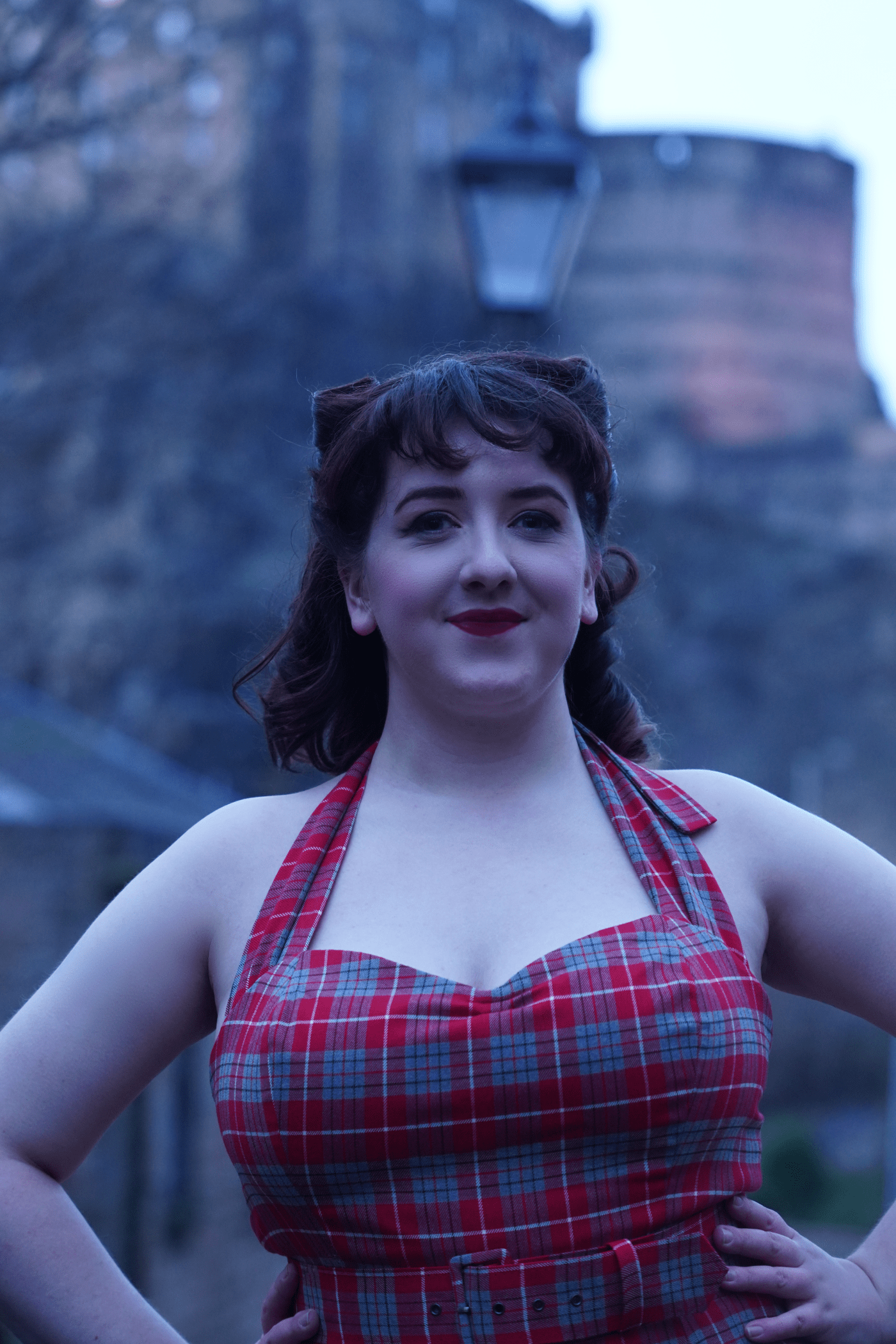
Delving into the spooky, paranormal and unknown, Kathleen Hughes chats to Pepper&Salt about her upcoming debut show, Cryptid!,at the Edinburgh Fringe, finding certainty in the uncertain and the ghost stories that run rampant in this corner of the world.
What’s the elevator pitch for your show?
Cryptid! is a show about the feeling of constantly moulding and adapting your identity to fit who you think you should be, instead of just existing and letting people see you as you are. It’s one for your Fringe list if you’ve ever felt like you’re not sure who you really are, if you’ve ever hidden yourself away, or if you think Bigfoot seems like a laugh.
What was the writing or decision-making process like that led you to approach your debut from this angle?
I had a work in progress show last year called One of the Girls, about the conflict between what ‘feminism’ meant to me as a wee girl, compared to how I think of it now as an adult. I liked the material, but I wanted to develop the themes to encompass other aspects of identity. I was also feeling a lot of pressure around being unable to control how other people perceive me as a comedian.
The concept of disagreeing with my younger self was appealing, but I realised I felt disconnected from her and made myself think of what we still have in common – which is mostly being stubborn and liking anything a bit spooky and weird – so I tied that into the new iteration of the show.
What do you hope the audience will take away with them at the end of this show?
I hope that people have a good time. That’s really the big one. I hope that they find it relatable and that through laughing at me, they feel seen and understood. I think that’s what stand up is for, when you get down to it.
I also hope they’re more alert and prepared for alien encounters, but that’s just a bonus.
“The idea of a cryptid reflects the idea of only really existing as people perceive you, which is something I wanted to write about and I think a lot of people struggle with.”
What are you looking forward to about your Edinburgh Fringe debut?
Not to be edgy but I’m really looking forward to the end of the month. I can’t wait to look back on the experience and see how much I’ve learned, from doing the show every day and from watching other performers. I’m so ready to watch hours and hours of comedy. The wee glimpse into other people’s brains is the most exciting thing for me. I started getting really excited about this show at the Fringe last year while watching comedians telling their stories in so many interesting and engaging ways, so I can’t wait to be in that mad whirlwind of creativity and motivation again.
For those who don’t know, what is a cryptid and how does the title relate to the rest of the show?
A cryptid is any creature whose existence is claimed, but as yet unproven by science – like Bigfoot, or the Loch Ness Monster. The idea of a cryptid reflects the idea of only really existing as people perceive you, which is something I wanted to write about and I think a lot of people struggle with. If the people around you have an idea about who you are – you’re the mum friend, the fun one, the laid back one, the smart one – you feel a pressure to fulfil that, even if it isn’t a true reflection of yourself.
What is your favourite Cryptid?
I’m a huge Bigfoot girl. I think there’s something very soothing about the setting of a dense, rainy forest, cut off from civilisation. Bigfoot’s energy is solitary, serene, iconic. I also love Nessie, but that’s a cultural bias (and her branding is immaculate).
Scotland, and Edinburgh in particular, are quite famous for their ghost stories. What would you say is your favourite or one that you found particular humour or comfort in?
When I was about nineteen I worked at Cumbernauld Theatre, in my hometown (which is, funnily enough, Cumbernauld). The theatre building was an old cottage which had been converted, and there was a story that the ghost of a little girl could be heard laughing and running around backstage and at the bottom of the stairs. I don’t think anyone had ever actually seen or heard her, but I always liked the idea that she was there, running about in her home, even after it had been changed so dramatically. Ghosts are a nice reminder that spaces aren’t just pubs and theatres and comedy clubs and what we see now – they have history and memories, and weird little creepy children who are as entitled to be there as we are.
What is the comfort in the unknown?
I’ve always loved stories to do with anything a bit creepy and supernatural, even as a wee girl. I was a big know-it-all and I hated feeling stupid – it was fun to have something where the whole point was that no one knew the answer. As I’ve grown up, I’ve become a big believer in needing to be scared sometimes to grow – if you’re never a bit frightened, you’re not learning anything new. Reframing ‘scary’ things as exciting and interesting has really helped me through difficult experiences with my mental health as an adult, and the feeling is very similar to hearing a new scary story when I was little.
In Shakespeare, the role of the fool and the king are very distinct, with the idea that a fool can’t be a king and a king can’t be a fool. How do you think this applies to the modern context?
I don’t know much about Shakespeare, but I think the role of a ‘king’ – whatever that means in a modern context (A CEO? A president?) – is to reassure everyone that everything is under control, no matter what the reality is. The role of the fool is to point out how ridiculous that is, considering that the things that are going wrong are probably the king’s fault.
It seems to be tempting (for some reason) for comedians to think that we have a right or responsibility to speak the ‘Jester’s Truth’ with impunity, but I don’t think that’s the whole deal. It’s healthy to talk about things that impact us all in a way that is accessible and unifying, by laughing about them. It doesn’t need to be political, although it can be. It’s just talking about how we feel. If the king’s role is to tell us we should all feel good, then it’s the fool’s role to tell us it’s fine if we don’t, because everyone else feels a bit shit sometimes, too.
By Katerina Partolina Schwartz
Photo Credit: Duncan Lorthioir
 Pepper & Salt
Leave a comment