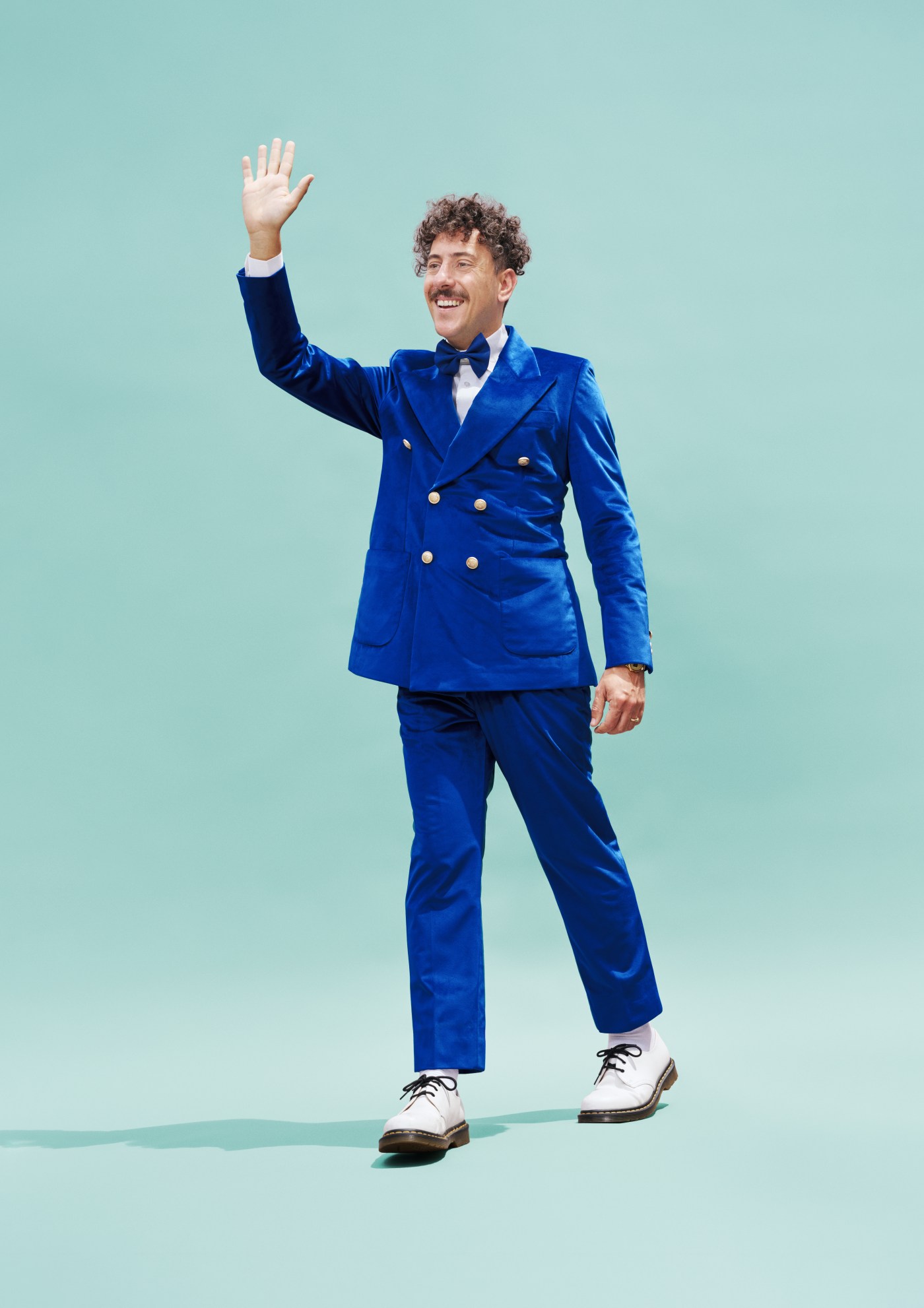
Returning to the Edinburgh Fringe with a new show, Crowd Pleaser, Schalk Bezuidenhout muses about his fringe hour, career and the meaning of being a comedian to Pepper&Salt.
How would you summarise your show?
I would summarise the show as funny, in one word. It’s a mixture of stand-up and balls-to-the-wall fun. I’m being a bit more out there with my Edinburgh show, which I’m really excited about. I make the audience a bit more part of the show this time, and I would say, especially at the end, a bit more really up close and personal. Let’s put it that way.
I want to encourage anyone who has seen my shows before to really come to this show, because there is some really fun elements in there that I haven’t done before in a one-man show, that I’m really excited for people to see, which I think just takes it a little bit to the next level. Actually, a friend of mine said the other day, are you, “Are you really nervous now that you’ve written this show?” And then I said, “No, why?” And he said, “I don’t know how you’re going to top this.”
What inspired you to write this show?
Well, firstly just wanting to do Edinburgh every year inspires you to just write something, just to have a show. But I think with the idea behind this show comes from, cause initially I wanted to call this show Comedian, and then I decided on Crowd Pleaser. What inspired me was the whole idea of what ‘comedian’ means these days anymore, if people let’s say on social media, who have never even done a live gig, are also calling themselves comedians? And the term ‘comedy’ when I started over ten years ago was more like, you’re on the circuit, you’re on the scene doing comedy, now it’s very broad. I think it’s something to celebrate, and the fact that comedy can almost be anything now, but then if you now call yourself a comedian, what does that even mean? So then I started being fascinated with this thing of like but what is a crowd pleaser, is it different to a comedian because a comedian, you can call yourself a comedian, but it doesn’t necessarily mean you’re a good comedian. But a crowd pleaser, well you can’t be a bad crowd pleaser.
From the sounds of it, the premise of your show sounds very nostalgic. Looking back what has been your favourite moment or highlight of your career?
I would almost say sometimes the worst gigs is more the highlight than the really good gigs. Cause normally when you think of the highlights of your career, you’re thinking awards that you’ve won or the big shows. I mean I would say the biggest shows I’ve done was the few shows that I’ve opened for Trevor Noah, where you’re walking out in front of 12,000 people in a massive arena. But actually, the gigs that are really bad, where you die on your ass, that almost in a weird way stands out for me as a highlight because it’s like a little benchmark of how far you’ve come. Even if I just think of Edinburgh, where I started in 2018 in the basement of Bottega, I think it’s a Portuguese restaurant or something, where one show I had like 7 people, from now being in the Pleasance Dome which is right across road, with Pleasance which is such a reputable force at the Festival. At the time it felt very shit, now looking back, now it’s nice to look back at that and go, “Okay wow, it wasn’t for nothing.” I tell a story in the show about one of my first gigs which was in a strip club, which was really something.
So, how did it feel to kind of write this show, you know, considering like that you’re looking back and kind of, I guess, musing a bit more on like the nature of comedy?
I always enjoy the writing process of shows because it’s a very creative process and you know; I don’t sit down at a desk and write it. I do new material shows where I test it and then the show evolves and that’s what makes every show so special for me because you almost like raise it like a child, it starts in the very infant stages. Any show at some point just starts as a few bullet points on a piece of paper and then you start exploring those topics and those stories in front of an audience and especially, like the story about the strip club, that I tell about my life. The first time I tell it, I’m just telling the story, there’s no kinds of like different side avenues and nooks and crannies and there’s not really a punchline; you just tell the story just to see is an audience even interested in the story and then when you see that and the more you tell it, every time you’re discovering little moments and then you go down into this avenue about this person and who was there in the audience and then you go down there and talk about the manager of strip club for a bit and then eventually it starts taking shape. Then suddenly there’s all kinds of layers and then the story almost becomes like a mini movie instead of just like a story that you tell from start to finish, so I really enjoy that process. Also, even at Edinburgh itself and I think every person’s show this happens to, but, you know, the show develops at the festival itself and I think the first show and the last show are quite different. Just because you discover things. Also as a comedian, I enjoy trying to find jokes and material about the place that I’m in, so like when I’m in Melbourne, I’m trying to see, okay, what can I say about Melbourne specifically, even not just Australia, but Melbourne specifically because the audience feels then like, “Cool, you didn’t just come and copy paste the same show you did in South Africa, now you’re just copy pasting the same show here in Edinburgh.” I don’t want to just copy paste the show that I’m doing here or that I did in Australia and then I just come copy paste it in Edinburgh, so I always try and work in a few things that people can go, “Okay, he’s talking to us and he knows that he’s in Edinburgh in Scotland, you know, and we are our own people,” so I always try and make as many jokes as I can about the actual place as well.
Lower your expectations and then anything good that comes from it is like an extra added surprise bonus. And also, just go to have fun…go watch shows, get inspired, go out, hang out with comedians, just network, meet people. It’s a fun place.
The person that taught me that, that I observed from is Trevor Noah. He is really good at really making every city feel special. If he goes to a country, he speaks about that country, he speaks about the people and even more specifically cities, individual cities, like even in South Africa, the show that he does in Cape Town is different to the show in Johannesburg. Not vastly different, but I would say about 10 percent of it is different and he will always, what is relevant that week in the news or in politics or whatever, bring that into the show, it just, I think, makes people feel like you are always working; you didn’t just work for one month, write a show and now the rest you are just blurting it out every time, just going into autopilot and just doing it, because it can be easy to do that. At some point the show reaches like, I almost want to say like a cruising altitude, where you know the show so well, you know it off by heart, you can do it in your sleep. That’s why I’ve built an element into the show this year, with the audience participation, where I bring an audience member onto stage – I don’t want to give everything away – but that makes the show fun and exciting for me, every show special for the audience, because that person that comes up every time is completely unique to that show. There’s some shows that I’ve done in South Africa with that element in, then people say, “I was at the show when the guy said this”, then I know exactly, oh yes, that was the show in Joburg on this night, because and that is the unique thing of every show, and then it feels like me and the audience that night, we shared something special that no other audience experienced, and then the next night’s audience as well, that they have their own little special thing, which is really fun. I do normally you know, do a little bit of crowd work in a show, and that also helps always to make it like a bit special, because people will even say, like last year they’ll say, “Oh I was at your previous show in Edinburgh, when you joked about the kid, you spoke to the kid in the front, and he said he wants to become a pilot, and you said this,” and then I’d go, “Oh yeah, I remember that show.” I always enjoy stuff like that. “The person walked out, and then you commented this or whatever.”
What do you hope audiences will take away from them after this show?
Normally, I’m not a political comedian, shock comedian. I don’t particularly go into the world of tragedy, so I just normally with my shows want audiences to walk out and if asked what shows they enjoyed, recommend my show. I think, especially in a space like the Fringe, there’s so many shows and people watch so many shows, if they are recommending your show to their friends, it means it really stood out to them amongst a sea of shows. So, if someone is recommending my show to someone else, that means I’ve stood out from the rest, and for me that is a huge compliment.
What advice would you give someone making their Edinburgh Fringe debut?
This is going to sound negative but it’s actually, it’s not as negative as it sounds, but I would say lower your expectations. There’s so mnay amazing stories from Edinburgh like Phoebe Waller-Bridge’s from Fleabag or people doing one Edinburgh Fringe and then their careers blow up, but that is really the exception to the rule. I don’t think your brain can grasp, I still can’t grasp how many show there are. Because you keep seeing the same posters, so when you walk around the Festival, it doesn’t feel like that many shows, it feels like oh there’s probably two, three hundred shows here, but there’s so many shows, there’s like five thousand shows. I think Fringe is the same sort of thing as people moving to Los Angelos and thinking, “I’m gonna go there and within the first month, some director is going to see me waitressing and they’re going to say, “you’re my next star!” And a lot of people go to Edinburgh, and they go, “I’m going to do my show and it’s just going to be word of mouth, and a famous comedian is going to sneak in and I’m going to get a big break.” Lower your expectations and then anything good that comes from it is like an extra added surprise bonus. And also, just go to have fun. I think people really get fixated on their shows and stuff and I mean Edinburgh, it’s a once in a year thing and the biggest arts festival in the world; go watch shows, get inspired, go out, hang out with comedians, just network, meet people. It’s a fun place.
Has it become too big for comedians, for artists to actually be able to do their thing?
I mean, I’ve only known it to be so big because I only started in 2018, which is only a few years ago. I think maybe some of the comedians that have been going since the 90s might maybe feel that it has become too big. I guess that will always be a positive and a negative of a festival that’s not curated. The fact that anyone can perform is that you will get people that you will go watch the shows and you go, “How did you think that you can dish this up to an audience or expect people to pay for this?” But then you will also find these golden, amazing golden nuggets of people that are not getting into curated festivals, but they are actually brilliant and it’s a great place to discover new talent. At Edinburgh, at least book for the big names and the names that you know and love and trust, but go watch a few shows where you almost just eennie-minnie-moe or just walk past the show. If you have an open schedule, walk past the show and the person that hands you the flyer just go in. Often – this might sound a bit sadistic, but I think all comedians enjoy this – for comedians, watching a really bad show is almost equally as entertaining as watching a really good show, unfortunately for the wrong reasons.
Apart from your own show, who else would you recommend do you have?
I saw a work in progress last year of Natalie Palamides, that obviously she’s now doing the proper polished version, which I would definitely recommend, because the work in progress was already great. I love the clowns, I love clowning, and in Australia there’s so many comedians that bring in clowning elements into their show, and that was also like a huge inspiration for me with this show, to go, “Why limit myself to just doing stand-up comedy man and mic style?” Like if you suddenly just want to do a fun dance or a silly song, like why not, just be silly, and I really like shows that are silly, you can see the person didn’t overthink this. I love Josh Glanc, who’s also a great clown, very funny. Sam Campbell, who won Best Show a few years ago, is, I think, such a good example of just being silly, and that does not mean it’s sort of not thought through, but it’s just great, and just so much fun, and you don’t have to read anything too deep into it, and then who else. O, and I love all the Stamptown acts as well. Stamptown‘s always such a fun show to go to, because I think the unpredictability of Stamptown is the fun part. You never know who’s going to make a surprise appearance, you never know who’s going to run onstage naked, it’s always a wild show, and it always turns into like a big party as well. So, I really enjoy that as well.
In Shakespeare, the role of the fool and the king are very distinct, with the idea that a fool can’t be a king and a king can’t be a fool. How do you think this applies to the modern context?
I think, which is not like a completely new idea, but people always say that these days, the politicians in our world are the comedians, in the sense that they’re basically just clowns, and the comedians are more like the people who actually speak the truth. I think the roles have been reversed in modern times, because in ye olde times, the fool was really just, would slip on a banana peel, and it was just to make people laugh, and the king would be the one people listened to, but now I feel people listen more to comedians, and laugh at politicians. But maybe that’s not a bad thing.
By Katerina Partolina Schwartz
Photo Credit:
 Pepper & Salt
Leave a comment