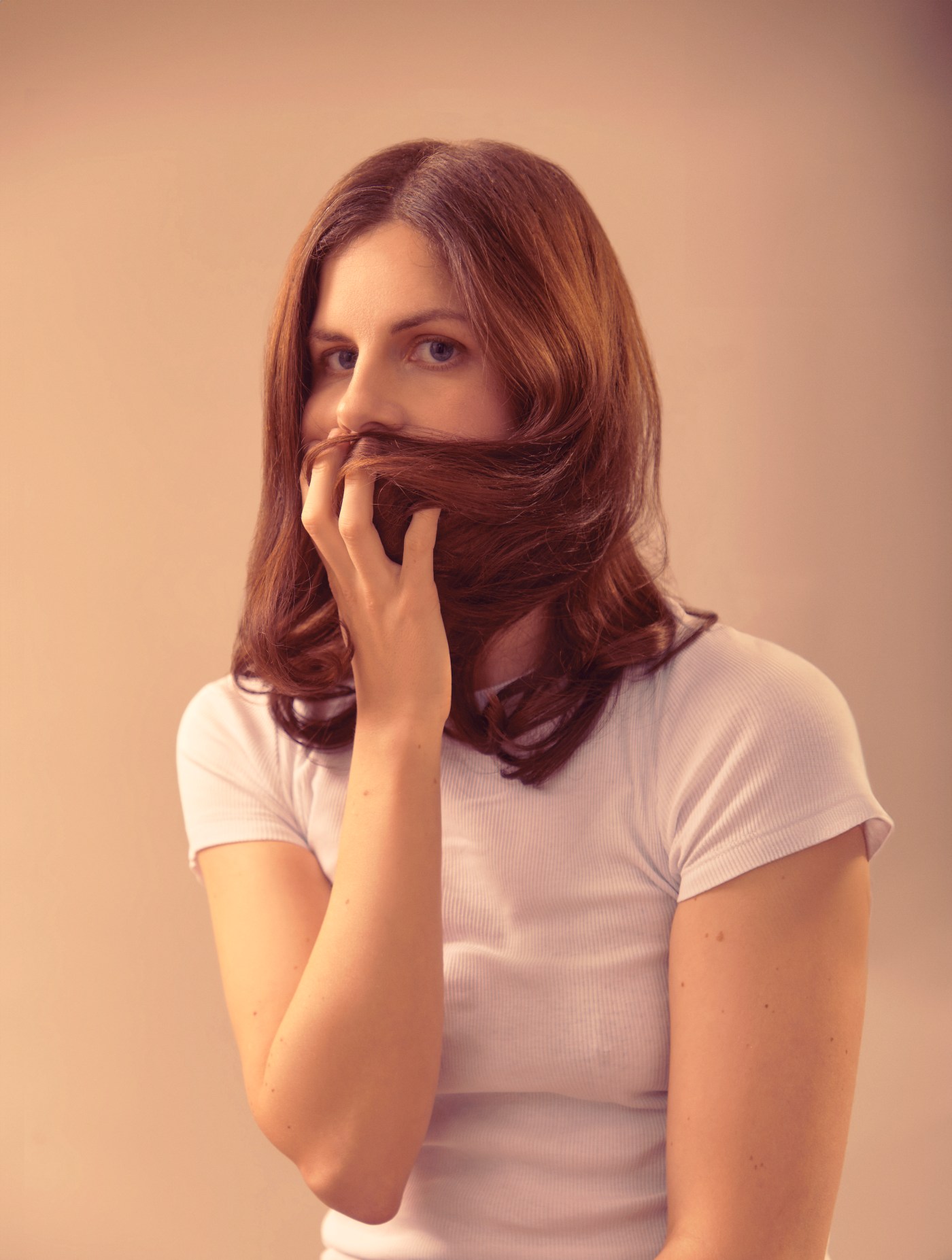
Following the success of her show The Precipice, Micky Overman returns to the Edinburgh Fringe with a new hour, Hold On. Overman chats to Pepper&Salt about Hold On, the art of catching people up on her year and receiving the ‘Exactly!’ laugh.
What is the elevator pitch for your show?
It’s a show about commitment, and it’s a show about what to do when you’ve got everything you wanted, but you still feel bad. It’s definitely a very different show this year, because I’m different this year. So like two sort of updated concepts that kind of carry on from the last show into this show, because it’s about what’s going on with this year. What I like about this year, I feel is that the show, it’s just a very simple story. There’s lots of different bits in it, but in the end, I think it’s quite simple. And I think it’s quite beautiful in its simplicity this year. I’m pretty proud of that.
Why did you choose to approach the subject from this particular angle?
I always try to just start from where am I at, you know, like, what’s going on with me, and what’s going on with my life, because I think themes tend to kind of naturally emerge if you’re just looking at, like, what’s actually keeping me busy, and what’s going on in my head? So, I tend to start from there, and that was what was going on in my head.
What are some of the central ideas or themes that link this show together?
Me. Me. It’s me. It’s me. It’s a person, a woman in her mid-30s, kind of transitioning from one phase of life to another. I like those shows the best when it’s sort of the central narrative is around the person that you’re watching, and then there’s bits of the show that are outward looking, and that kind of are more talking about the world or there’s an observation or whatever, but the actual central narrative is just, what’s going on with you? Almost like you’re having a conversation, like, ‘catch me up on your year,’ kind of situation. A little bit of storytelling, and it’s observations, and it’s very silly as well.
“I think the more girls do it, the more we get those stories out there, they’re going to be as generic as anyone else’s. It’s so great.”
How did the special of last year’s show, The Precipice, go?
Great! It’s been really good. The response to the show was really positive. So, I thought, “Okay, that would be a really great thing to kind of film.” And, you know, we’re kind of lucky nowadays that you can do something like that, if you want to, there’ll be someone who can film it for you. And you can put it out there. It used to be like, someone would have to be like, “and we’re going to put this on a DVD for you and then you can put it out in the world,” but obviously, there’s YouTube now, and you can just put stuff out for everyone to see. The show itself was incredibly, we did two shows, they were incredibly fun shows, even just to do. And then the person I worked with, who directed the special Andrew Nolan, he was just incredible. And we had so much fun kind of putting it together. And we were together in the editing bay. And we put it all together. And it looked so good. And it’s so good. And I just thought, wow, this is so great. And my initial idea with it was, I just wanted to film it so that I could put clips up on social media. And more people could find me and then I can go and do more shows to more people. But I put it on YouTube as a whole as well. And it’s great. Loads of people have watched it over. It’s only been out a week, I think like 20,000 people have seen it already. So, I’m absolutely delighted.
How has that process differed to, you know, just taking a show to the Fringe or, you know, opening for someone or just taking it to a comedy night?
Well, it’s so cool, I think, because your audience used to just be whoever was in front of you in the room. And now your audience can be anyone in the entire world. Anyone in the entire world can find you. And it also means that you can be a little bit more true to yourself. Because people online will find you and then the people that like you will find you. So you don’t necessarily have to worry about only pleasing the people in the room, because you can think like, “No, there’ll be people online who will get this and who will like me for me.” I absolutely, I love it. I mean, it comes with some bad stuff. But mostly, I think it’s positive.
Where have you managed to find this voice and space where you are comfortable being vulnerable to speak on personal stories onstage?
With a bit of help, I think. So, I work with a director, his name is Will Rowland, and he sometimes really helps me to untangle everything that’s going on in my head, where it seems all messy and sad. When I was working on the precipice, I was very sad when that happened with my mum, and he helps me, kind of, to untangle those threads, and make it really clear. And then it really helps to do comedy about it, because it’s almost like when you keep a diary, or whatever; just anything that just gets it out of your head, and onto the page, or in the world, or onto the stage. It’s actually very cathartic.
It seems that in a lot of areas, there’s a realisation that women have been left out of many different areas of research or society, and there seems to be an ongoing effort to correct that. And people don’t talk about things specific to the women’s experience a lot, for example your story and the things that you talked about in The Precipice and now this show, you don’t hear about those experiences or viewpoints often. How does this idea apply to the comedy industry?
You know, I love it. I love it because when I was talking about this whole idea of like, should you have a baby in this day and age and what that means for you as a woman to become a mother, there were like two other women at the same time on the comedy circuit who were like writing about that. And I just thought like this is so great because there’s loads of shows about guys becoming dads, but there’s not that many about this from our perspective. So I love it. I think the more girls do it, the more we get those stories out there, they’re going to be as generic as anyone else’s. It’s so great. I mean, when you think about the years that women as audience members just have to like laugh as they were like, basically the butt of every joke, you know what I mean? And, I think genuinely, I don’t think that they were laughing like inauthentically. I think they were like, “Hilarious, we are like this,” you know, but then it is also nice for that to be balanced out by an actual woman’s perspective, because then they can laugh in a way of like, “You get it!” Like, I love when there’s a laugh in the room from women who are like, “Exactly!” It’s almost like they’re breathing out like, “Oh, someone saying it,” which is great.
What is something that you wish you knew when you were first debuting at the Fringe?
Oh, that it doesn’t matter. And I think I got quite good at this, but I think there’s such pressure on young, young acts to, I don’t know, deliver something amazing. In your year group of the people that are debuting or doing their first show, there’s probably going to be one or two people who either just manage to just do something spectacular, or they just have a really good story to tell. And so, it’s almost like they set the bar for these amazing shows. And really, what you should focus on, in my opinion, is to just get better, funnier, and just get out there, and just do it. That’s what I did. I mean, some people might say that that’s a bad strategy, but I liked it. My first show was quite early on, and I really liked it. I just wanted to get out, I just wanted to get better. And I thought the only way to get better was if I started to do hour-long shows. And I only feel like in the last few years, I’ve really started to be like, “Oh, I’m getting good at this now.”
What are you looking forward to at Fringe this year?
Well, if you had spoken to me about a month ago, I would have really panicked. But now I actually think the show is getting really good. I’m very excited about just putting it out there and having people come and see it. And I mean, I’m a big comedy fan myself and so part of the appeal of the Fringe is I get to see so many great things myself as a as a punter, as a fan. I’m really excited. I’m really excited about I just got to spend a month not having to take the train anywhere. And seeing loads of comedy.
Apart from your own hour what shows would you recommend?
Well, listen, I’m biased, but my friend Sarah Keyworth has won the Melbourne Comedy Award for Best Show. And their show, I mean, I’d be really surprised if it didn’t win a prize in Edinburgh as well, because they’re amazing. And it’s amazing. So, everyone should go and see their show. Absolutely. 1000%. Also, I saw some bits from Sarah Barron’s show. She’ll be in Edinburgh this year. I saw some, some bits of her show just kind of gigging around town. I think that I think she’s really funny. And I think that’s going to be really, really funny.
In Shakespeare, the role of the fool and the king are very distinct, with the idea that a fool can’t be a king and a king can’t be a fool. How do you think this applies to the modern context?
I like it when it’s a combination of both. I think I do that in my shows. Where you have like a little bit of speaking truth to power. But also, you never forget that you are the fool. But that doesn’t mean that you can’t be a powerful figure in itself, I think. There’s like this stereotype of like in the Middle Ages, the jokers, the jesters in the courts, they were the only ones that could insult the king. Which is such power in itself. I think that’s a kingly power. So, I think you can hold both. But I don’t think you should ever forget that you’re the fool. That should be the main focus.
By Katerina Partolina Schwartz
Photo Credit: Rich Lakos
 Pepper & Salt
Leave a comment