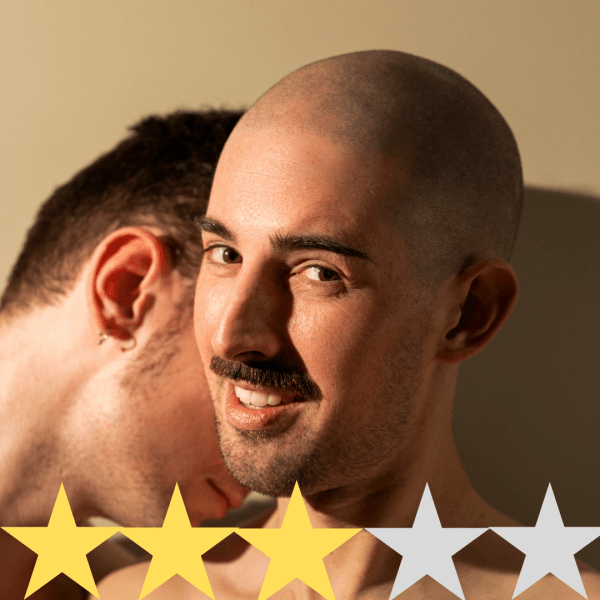
Titi Lee: Good Girl Gone Baddie

Titi Lee’s Good Girl Gone Baddie plays with the stand-up art form in ways that we’re perhaps not so familiar with, piling on material that aren’t necessarily relevant or substantive to push Lee’s overall throughline, which because of everything else going on, isn’t particularly clear either. 

Rich Spalding: Gather Your Skeletons

Death and the afterlife are quite unlikely topics or sources of humour for a stand-up comedy show, just from the juxtaposition alone. Rich Spalding’s debut hour Gather Your Skeletons not only proves that this is a false premise - or at least the exception to the rule - throughout the rest of the hour, that is  full to the brim of good-natured humour and amusement. 

Chris Weir: Well-Flung

Chris Weir’s Well-Flung is a nice story of self-exploration, but it isn’t much more than that. He is so concerned with getting through the narrative, that he doesn’t really stop to consider how it affects the comedy, and we can often go for long-stretches without any humorous break in the story. 

Kemah Bob: Miss Fortunate

Kemah Bob’s Miss Fortunate is a romantic’s journey into reality, that plays with different established norms and tropes to create a completely unique experience for us as an audience. This is also just a very fun - if slightly concerning- high-energy show where Bob uses different forms of comedy in order to craft this wild narrative.

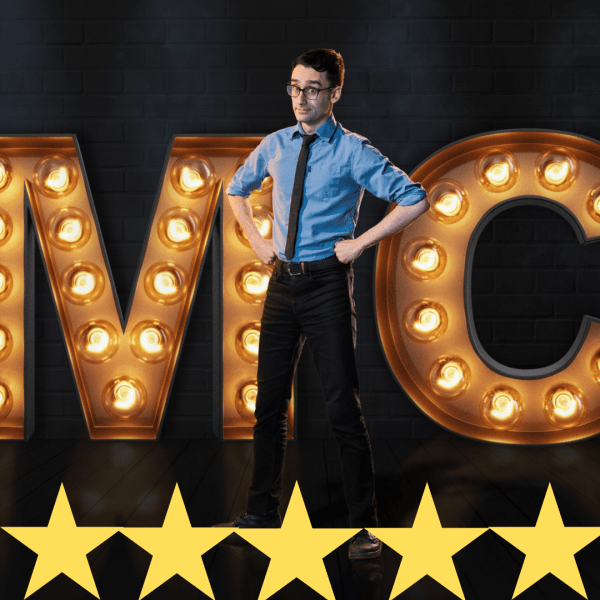
MC Hammersmith: The MC Stands for Middle Class

MC Hammersmith’s The MC Stands for Middle Class is just about as good as it gets in terms of improvisation, music and comedy. It’s difficult to go back to listening just rap after this show, because what MC Hammersmith does is a lot more impressive than anything out there. Even Hamilton appears less ground-breaking after seeing this show. 

Fools and Kings

In Shakespeare, the role of the fool and the king are very distinct, with the idea that a fool can’t be a king and a king can’t be a fool. How do you think this applies to the modern context?’ This question was asked in a series of verbal and written interviews over the course of May 2024-August 2024, which very quickly spiralled into a larger thought experiment. During this time, there was a series of events that very significantly shifted the political conversation. To name just a few; the UK had a general election, Joe Biden dropped out of the presidential race, Kamala Harris became the Democratic nominee, and Trump was nearly assassinated (which occurred in a semi-media blackout as many topical news programmes were on hiatus).  The question was initially devised in February 2023, taking partial inspiration from the political context of the previous years –Boris Johnson’s premiership, Donald Trump, Liz Truss and the cost-of-living-crisis - coupled with thoughts on a lyric from Stephen Sondheim’s 1964 political satire Anyone Can Whistle (‘laugh at the kings or they’ll make you cry’ – Everybody Says Don’t).

Showstopper! The Improvised Musical

Showstopper! The Improvised Musical is a Fringe institution. We walk in the room expecting a good time, to be thoroughly entertained by the cast’s antics onstage. What happens in that room becomes the stuff of legends and inside jokes. 

Steve Bugeja – Shiny

Shiny is Steve Bugeja’s latest offering to the comedy world at the altar of the Edinburgh Fringe. The show adopts on a linear structure as he takes us on a journey through his school days, comedy career to achieving his dream of writing a sitcom. Through all of this, Bugeja engages in a commentary about the connections that we make between self-worth, career and achievements, critiquing the nightmarescape that we create for ourselves. It’s a relatable hour as we follow him down this path of self-reflection that speaks to a larger sociological and cultural issues and analyses. It gets to a point where we can’t help considering when we’ve had a similar experience, when - to use Bugeja’s terminology - we’ve felt shiny or matte. 

Blog at WordPress.com.

Up ↑